Used in 2,000+ schools. No cameras. No recording.

Vape Detectors for Schools

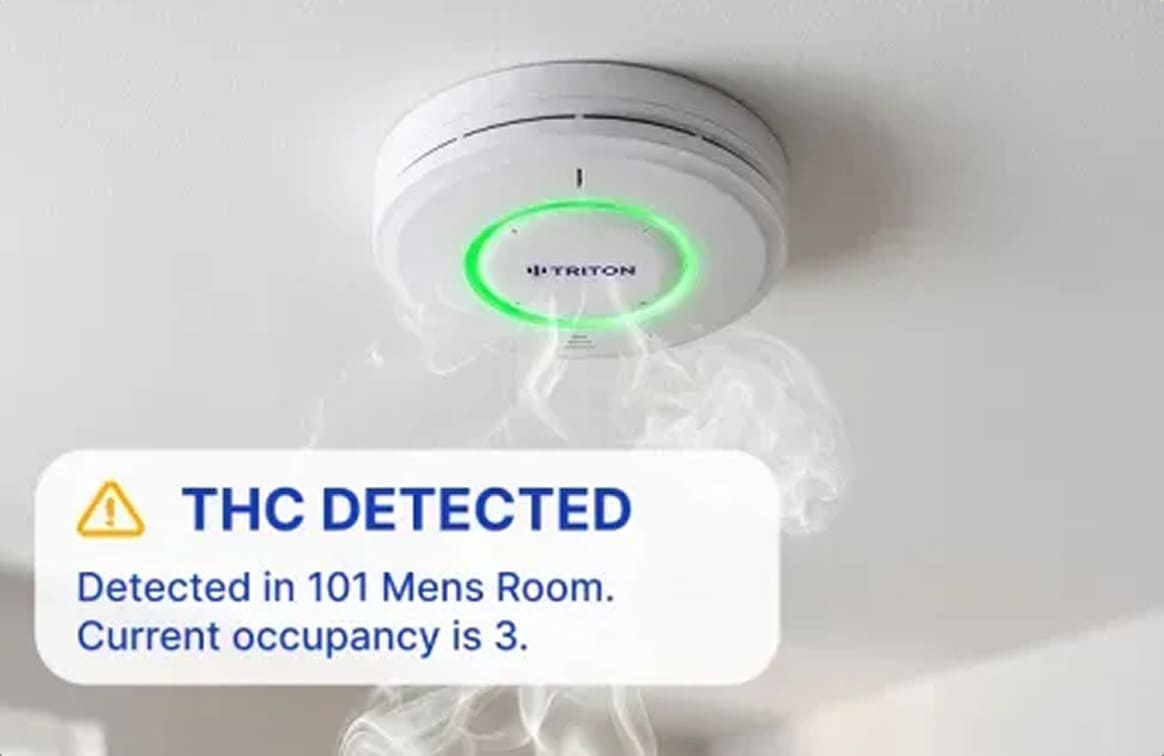
Catch vaping in the bathrooms and locker rooms where cameras are not allowed. Triton detects vape, THC and tampering and sends the alert to your staff in seconds.
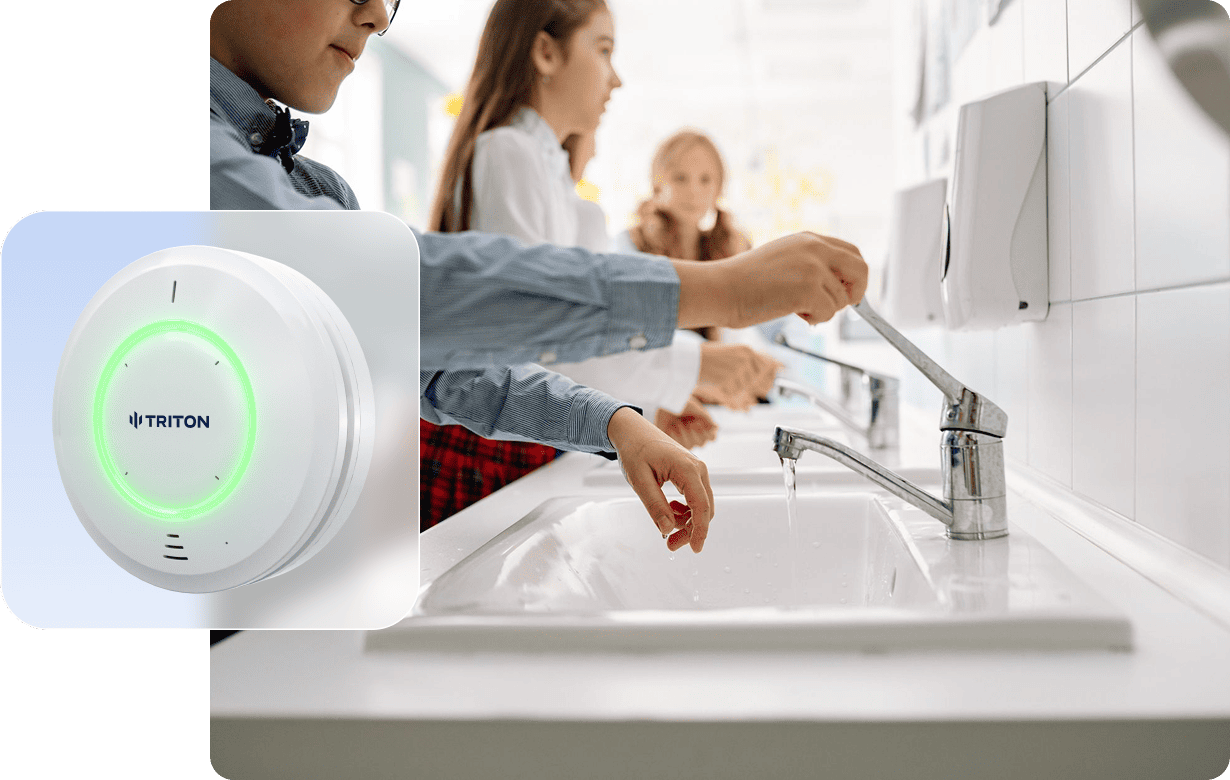
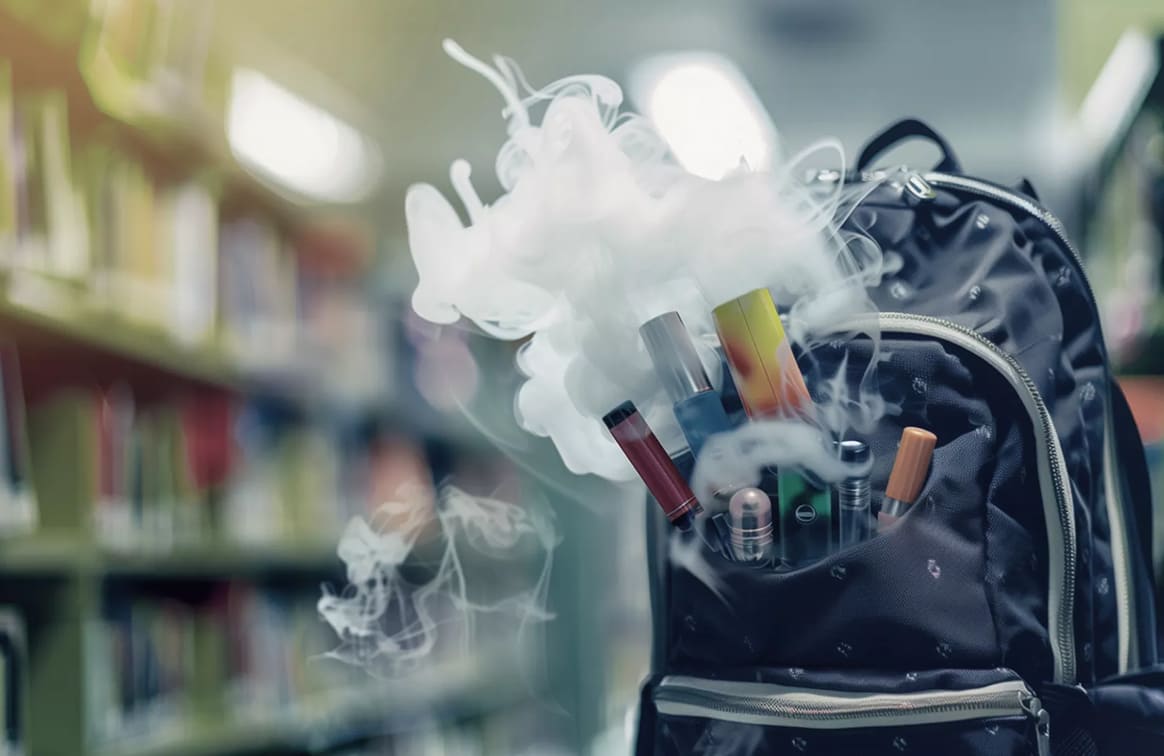
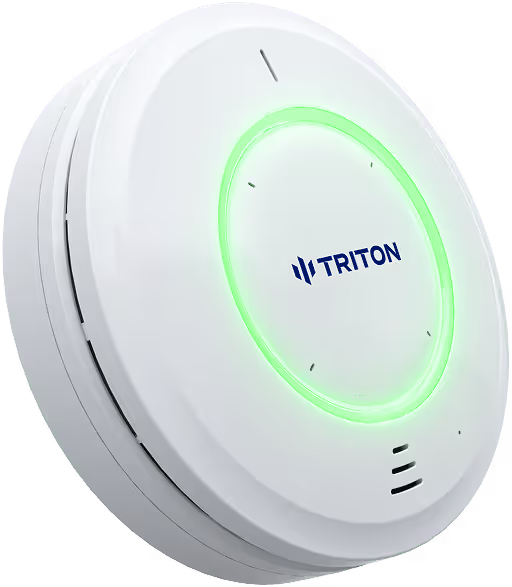
A vape detector for schools is a ceiling-mounted sensor that samples the air for the particulates and chemical markers vaping leaves behind, then alerts staff the moment it finds them. It carries no camera and no recording, which is what makes it lawful in restrooms and locker rooms. A school vape detector picks up nicotine vapor and THC, and most models also flag tampering, unusual noise levels and crowding in the room. Alerts arrive within seconds on a phone, an email, a Teams or Slack channel, or inside the video management system the district already runs, stamped with the room and the time.
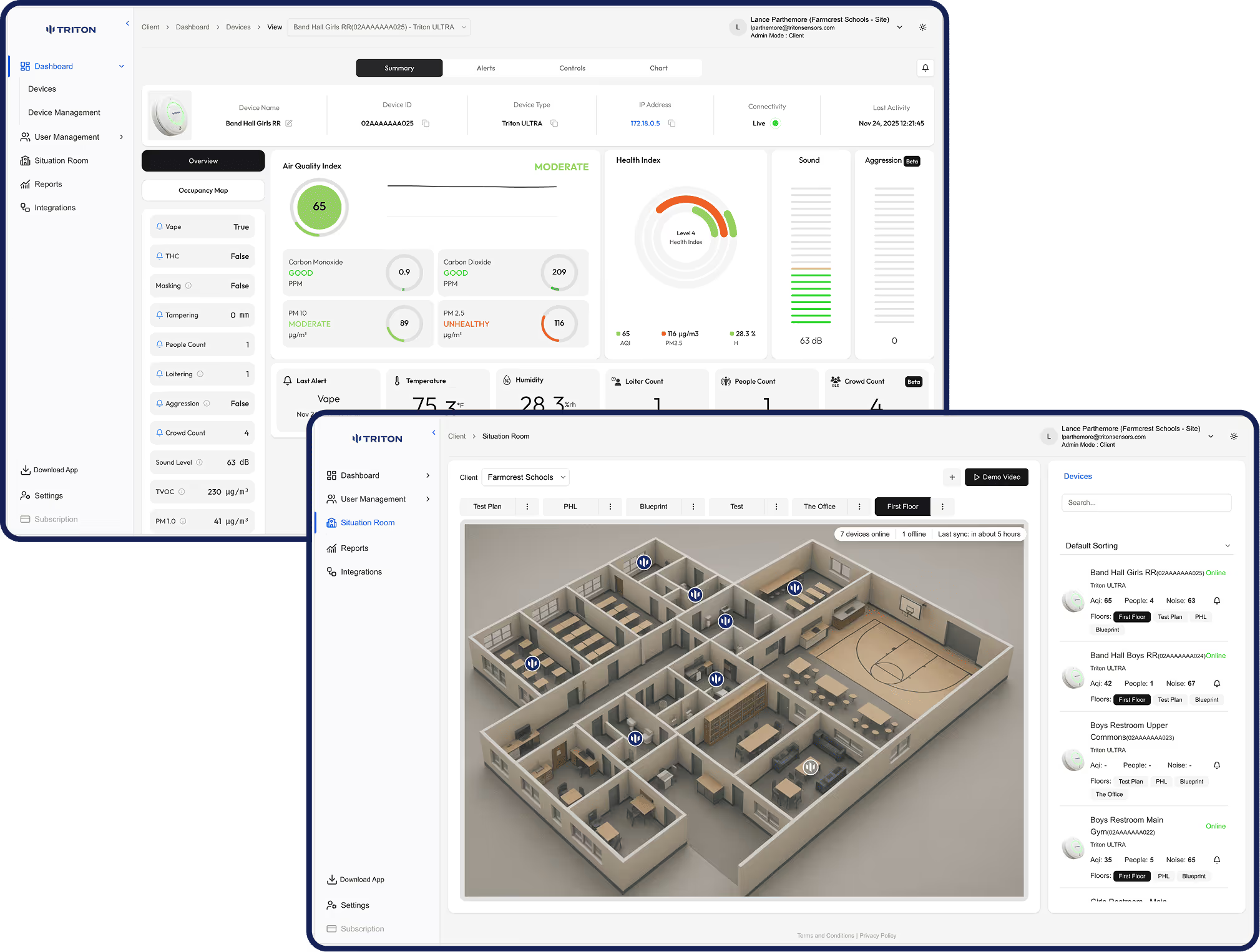
Triton builds vape detectors for schools specifically. Every sensor covers vape, THC, smoke, tamper, spoken safewords, occupancy and air quality from one unit, so a district installs once instead of buying a separate device for each problem. Districts running Triton have cut bathroom vaping incidents by 77% and 79% in their first year.

How vape detectors work in schools

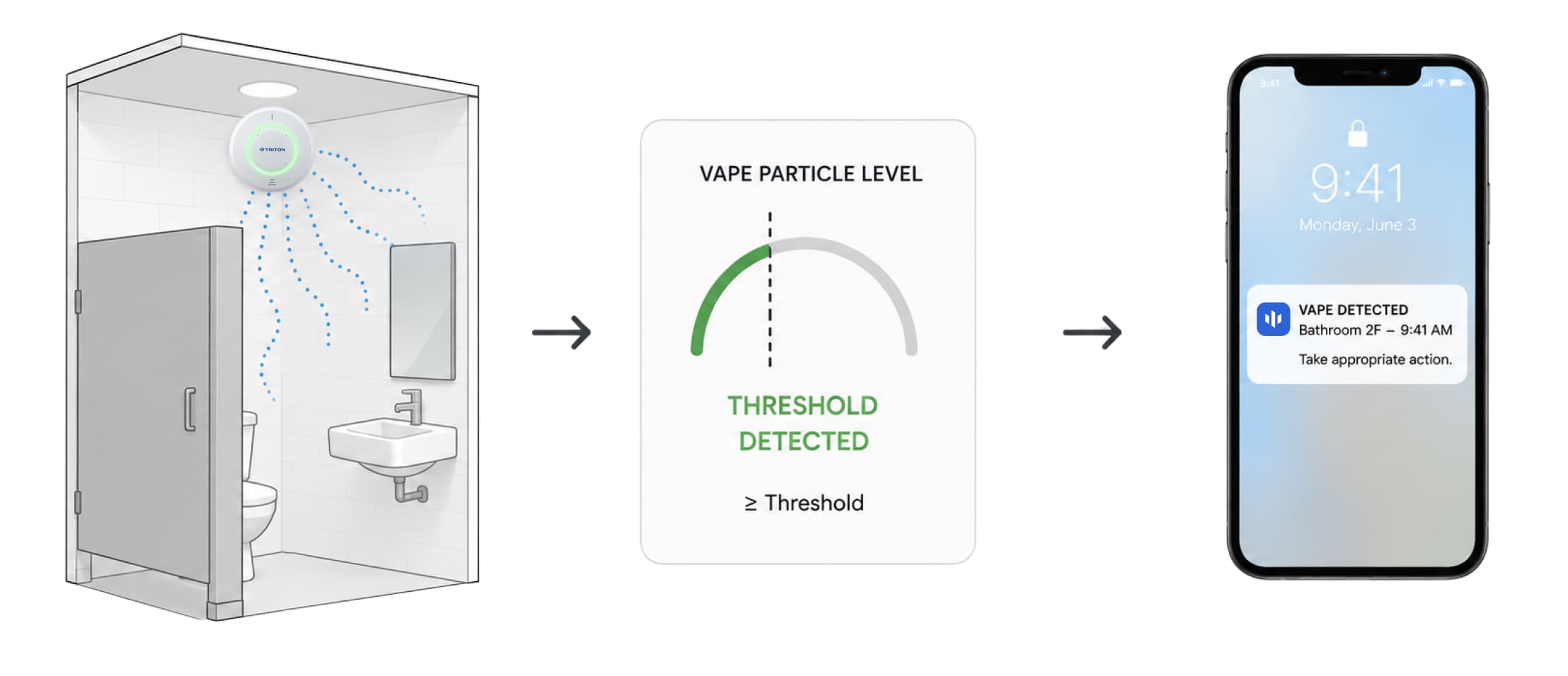
The sensor draws room air across a detection array on a continuous cycle. Vape aerosol carries a particulate profile and a chemical signature that ordinary bathroom air does not, and the array reads both. When a reading crosses the threshold set for that room, the sensor fires an alert.
Nicotine vapor and THC aerosol produce different signatures, and Triton separates them, so the alert tells an administrator which one triggered it before anyone walks down the hallway. That distinction matters for how a school responds. A nicotine incident and a cannabis incident sit at different points on most district discipline policies.

Get A Free Quote

Contact us today to learn about our school-safety solutions.
Thank you! Your submission has been received!
Oops! Something went wrong while submitting the form.

What happens between the vape and the alert

1
Detection
The sensor reads the air continuously. A single exhale into a bathroom stall is enough to move the reading.
2
Threshold
Each sensor carries a sensitivity setting tuned for that room. A small enclosed restroom is set differently from an open locker room.
3
Alert
The sensor sends the alert to whatever channel the school already uses, with the room name and the time stamped on it.
4
Response
Staff go to the room. Most districts pair this with a hall-pass record or a camera on the corridor outside the bathroom door, which is where identification happens.
5
Record
The alert is logged with its sensor readings, so the incident can be reviewed later rather than argued about.

What a school vape detector does not do

It does not take pictures and it does not record conversations. It reports that an event happened in a room at a time. Identifying the student is a staff job, supported by the corridor camera and the pass system the school already has. Schools that treat the sensor as an identification tool are disappointed by it. Schools that treat it as the thing that tells them where to be, and when, get the reduction numbers.

Vape detectors in school bathrooms and locker rooms

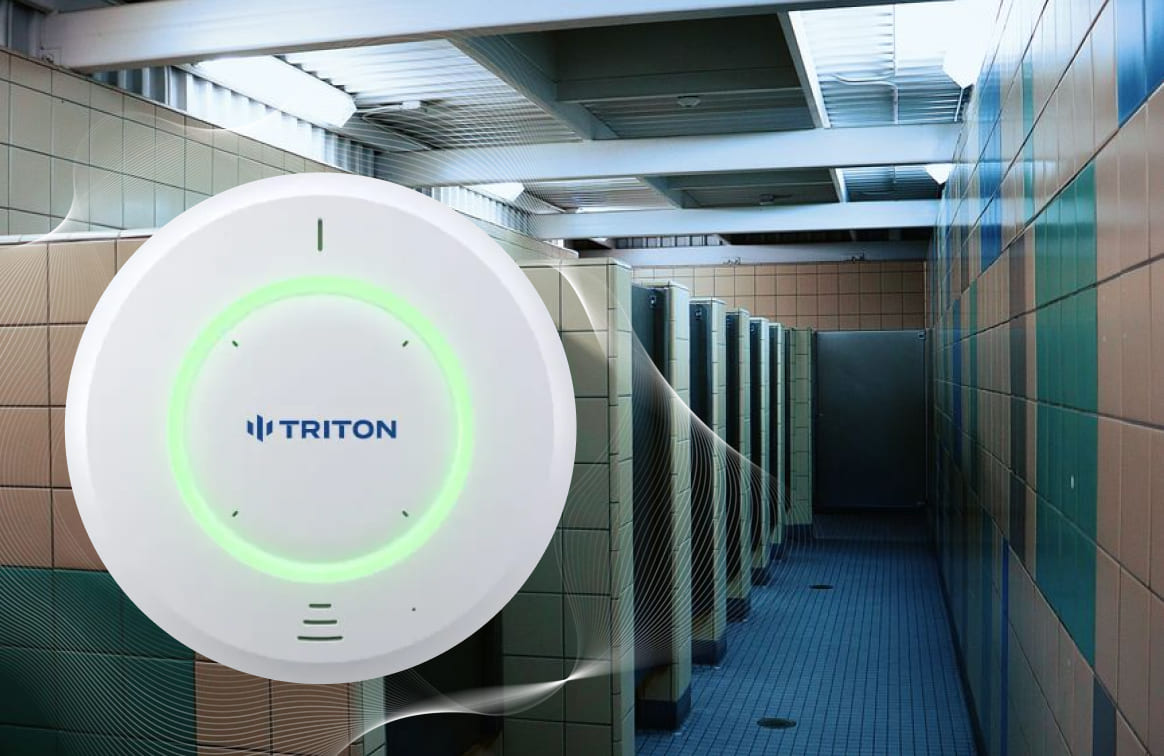
School vaping concentrates in the rooms nobody can watch. Bathrooms first, then locker rooms, then stairwells and the back of the bus loop. Cameras are prohibited in the first two, which is the entire reason air-sampling detection exists.
Placement
One sensor per bathroom
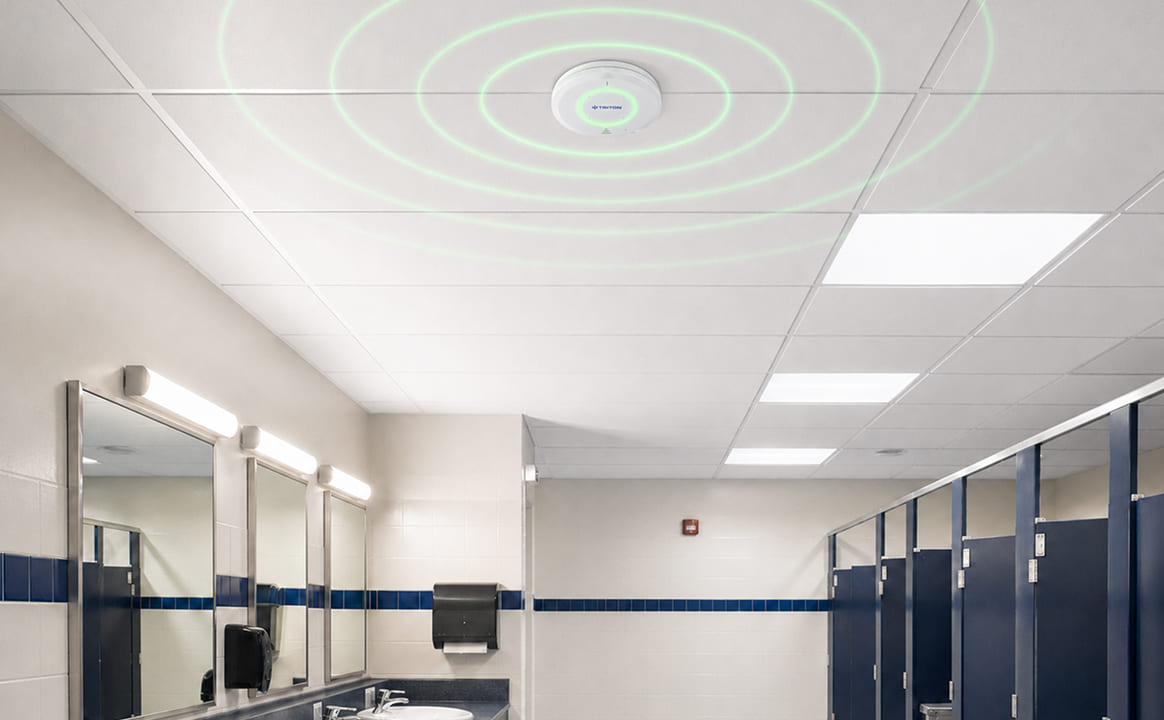
Ceiling-mounted, central to the stall bank. Triton covers roughly 160 square feet per sensor, so a large multi-stall restroom may take two.
Away from the exhaust vent
Mounting directly beside an extract fan pulls the aerosol away from the sensor before it reads.
Away from the hand dryer
Hot-air dryers move enough particulate to matter on a very sensitive threshold. Two to three feet of separation is enough.
Locker rooms need more than one
The volume is larger and the vaping happens at the far end from the door.
Height
Standard ceiling height. Vapor rises, so a ceiling mount reads faster than a wall mount.
Privacy
Triton sensors have no lens. Audio is processed on the device for sound level and specific spoken safewords, and conversation is never recorded or transmitted. This design lets a district install in a restroom and defend the decision at a board meeting. Write the placement into district policy, tell families where the sensors are, prepare for any legal questions districts ask and the objection usually ends there.

What vape detectors cost for schools, and how districts pay for them

Cost is driven by how many rooms you cover, not by how big the district is. Budget for the sensor hardware plus the platform subscription that carries the alerting, and count one sensor per bathroom and two per locker room as a starting estimate. A single-campus high school and a four-campus district with the same number of restrooms land in a similar place. Learn more from our school buyer's guide.

Funding routes that are open in 2026

1
JUUL settlement funds
Districts across the country are still receiving and allocating settlement money, and vape detection is a named allowable use in most allocation frameworks.
2
State school safety grants
Several states run dedicated programs. California committed $22 million specifically toward helping schools buy vape detectors.
3
Title IV-A
Student Support and Academic Enrichment grants cover safe and healthy student initiatives, which vape detection falls under in most state interpretations.
4
Local bond and capital budgets
Sensors installed as part of a bathroom or security refresh often clear capital review more easily than they clear an operating budget.
5
Cooperative purchasing
Triton holds vendor status on TIPS and with NYC DOE, which lets districts buy without running a fresh RFP.

Choosing the best vape detector for your school

Detection breadth
A single-purpose vape sensor solves one problem. Triton reads vape, THC, smoke, tamper, spoken safewords, sound anomalies, occupancy, loitering and air quality from the same unit. A district that buys single-purpose devices ends up installing three sensors in one bathroom over five years.
False positives
The fastest way to kill a vape detection program is an alert staff learn to ignore. Aerosol deodorant, steam and hairspray all move a naive sensor. Ask any vendor how their device separates those from vape aerosol, and ask to see the alert log from a live school rather than a lab result.
Where the alert lands
An alert that only appears inside a vendor dashboard nobody has open is a missed alert. Triton routes into push, email, SMS, Microsoft Teams, Slack, and natively into Genetec, Milestone, Avigilon, Verkada, Eagle Eye and other video management systems, so the alert lands where the security team is already looking.
Tamper handling
Students work out where the sensor is inside a week. Covering it, taping it or knocking it off the mount should raise its own alert. If it does not, the detection stops the first time somebody tries.

Putting vape detectors in your school

1
Walk the building
Count restrooms and locker rooms. That count is your sensor count and your budget.
2
Run a pilot
One sensor in the busiest bathroom for 30 days tells a district more than any demo. Triton ships a demo sensor free both ways to eligible schools.
3
Write the response
Decide before install who receives the alert, who walks to the room, and what happens when they get there.
4
Install and tune
Sensors go up in an afternoon over PoE. Sensitivity gets tuned after the first week of real readings.
5
Tell the school
Districts that announce the sensors see incident counts fall before the first alert fires.

See it in your own bathrooms

Book a 20-minute demo, or request a free sensor to run in your building for 30 days.

Vape detectors for schools: common questions

How do vape detectors work in schools?
A school vape detector samples the air continuously for the particulates and chemical markers that vapor leaves behind. When the reading crosses the threshold, the sensor sends an alert to the staff you nominate, usually within seconds, with the room and the time stamped on it.
Do vape detectors work in school bathrooms?
Bathrooms are the primary use case. Vape detectors carry no camera and no microphone recording, so they can be installed in the spaces where cameras are not allowed, which is where most school vaping happens.
Can vape detectors detect THC?
Yes. THC aerosol has a different chemical signature from nicotine vapor, and Triton reports the two separately so administrators know which one triggered the alert.
How much do vape detectors cost for schools?
Cost is driven by how many rooms you cover, not by the size of the district. Budget per sensor plus the platform subscription, and count one sensor per bathroom or locker room. Triton will size a campus and quote it before you commit.
Are vape detectors legal in schools?
Yes, in US public and private schools. Vape detectors sample air quality and sound levels rather than capturing images or recording conversations, which is what keeps them lawful in restrooms and locker rooms. District policy should still state where sensors are installed and what data is kept.
How sensitive are school vape detectors?
Sensitivity is adjustable per room. A small enclosed restroom needs a lower threshold than an open locker room. Triton ships with a school default and lets administrators tune each sensor after the first week of real readings.
How do school staff get the alert?
Alerts go to whichever channel the school already uses: push notification, email, SMS, Microsoft Teams, Slack, or straight into an existing VMS such as Genetec, Milestone, Avigilon or Verkada.
What happens if a student tampers with the sensor?
Tampering triggers its own alert. If a sensor is covered, struck or removed from the mount, staff are notified immediately with the room and time.

Related detection for schools