vs.

Triton ULTRA vs. Verkada vape detectors

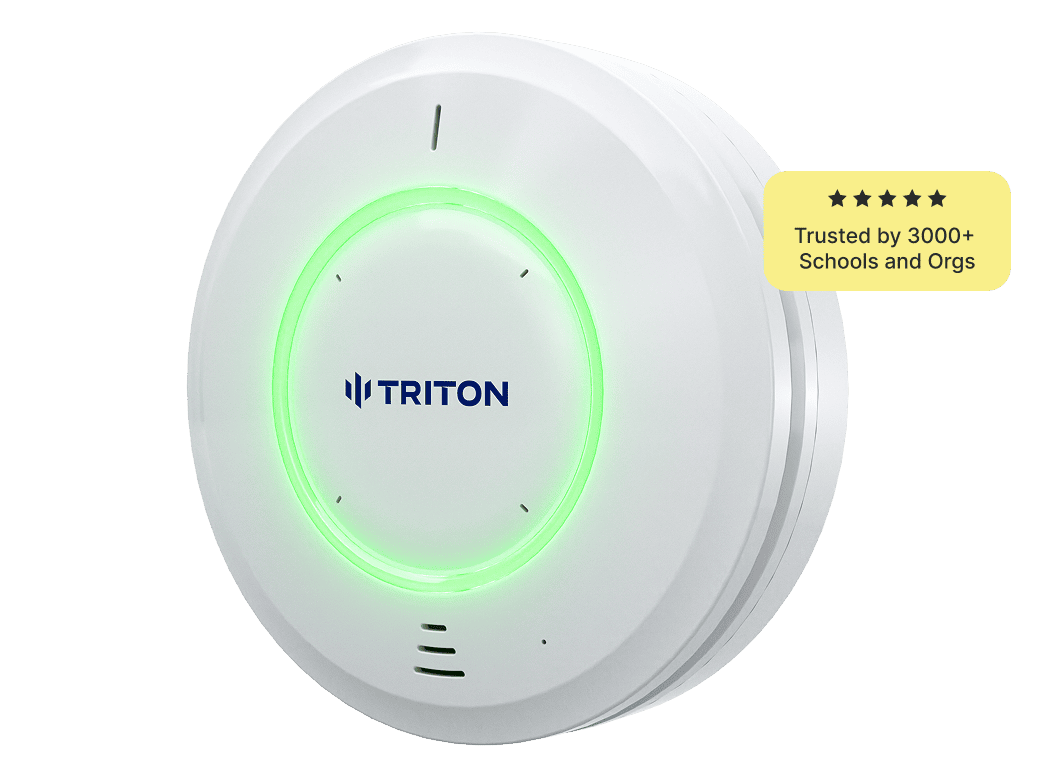
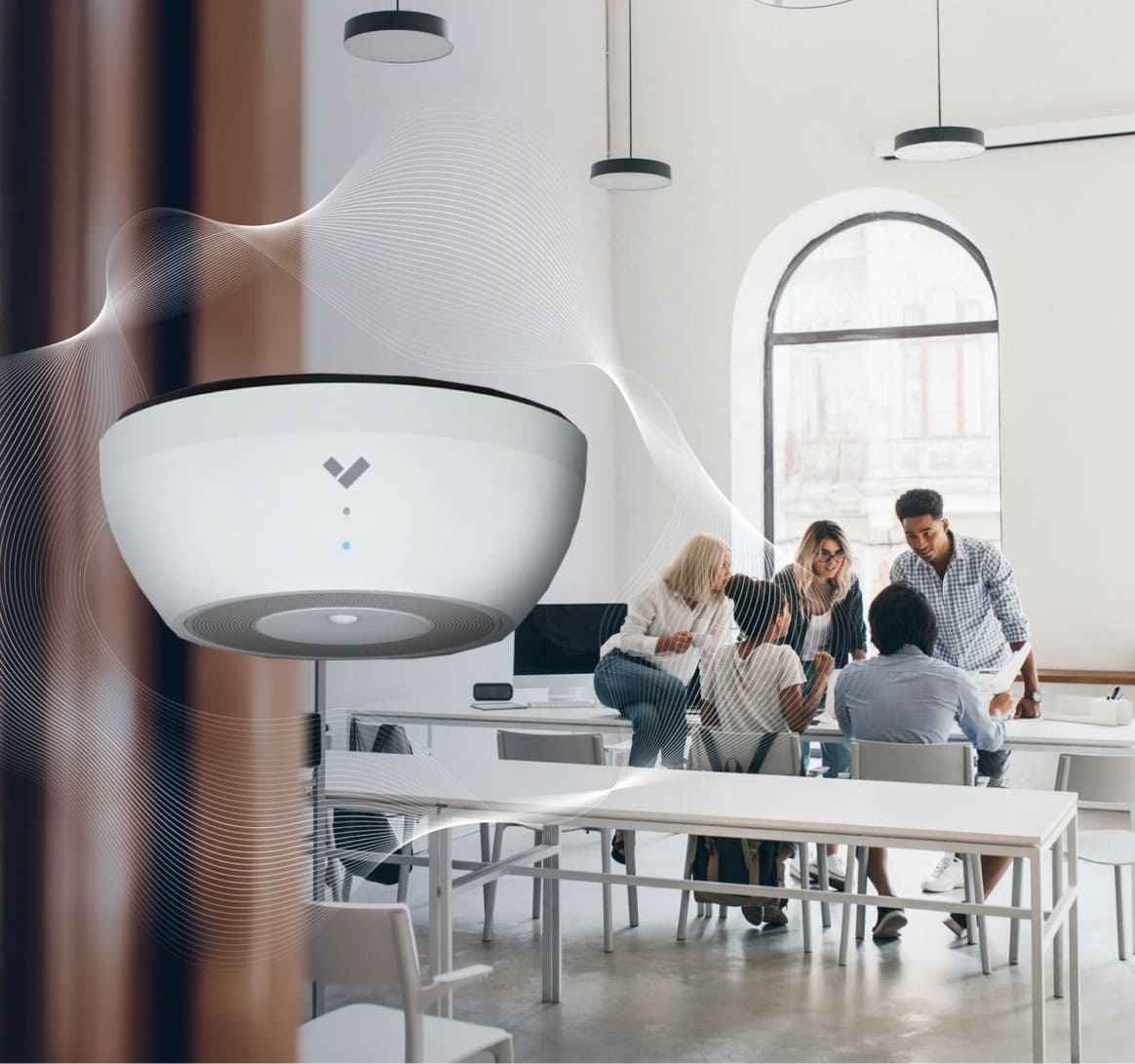
Triton ULTRA and Verkada’s SV23 and SV25 vape sensors are two options schools consider for vape detection. Triton ULTRA is purpose-built as a school safety sensor. Verkada’s sensors are general-purpose air quality sensors, built for many types of buildings as part of Verkada’s cloud-managed security platform.
We recommend trying both in your own building, because the best fit depends on your rooms, your network, and the systems you already run.

Triton ULTRA vs. Verkada at a glance

Capability
Triton ULTRA
Verkada
Vape detection
Detects nicotine and THC vape pens, plus separate THC detection for combusted cannabis
ULTRA Advantage
Vape Index (0–100) indicates suspected vaping or smoking; THC identification not offered
People counting
Built-in radar people counting
Not included
Occupancy visualization and loitering
Approximate positions, dwell time, and loitering alerts from radar
Not included
Emergency keywords
Spoken keyword alerts, including custom keywords through Triton Cloud
Not included
Aggression and audio alerts
Aggression and sound-level alerts; optional AI audio classification including scream/shout and glass break
ULTRA Advantage
Noise-level readings and thresholds
Cell phone detection
Included
Not included
Environmental monitoring
Air quality and environmental readings including PM, TVOCs, Formaldehyde, CO, CO2, NO2, Ethanol, Temperature, Humidity, Humidex
Air quality and environmental readings; SV25 adds CO, formaldehyde, light, and pressure
Software model
Local software included; Triton Cloud optional. Works without a subscription
ULTRA Advantage
Cloud only. Paid Verkada license required for each sensor, renewed annually or in multi-year terms.
Incident review
Triton Cloud Evidence Room pairs sensor events with supported camera footage
Sensor data overlaid or side by side with Verkada camera footage in Command
Alerts
Local email; Cloud SMS and app push; Teams, Slack, and Google Chat routes
SMS, email, mobile app, and webhooks via API
PoE daisy-chaining
Up to five sensors on one PoE+ line
One PoE connection per sensor; no daisy-chaining available
Standard hardware warranty
10 years
10 years
Published vape detection testing
98.9% overall accuracy across 8,400 events including perfumes, deodorants, etc.
No comparable published accuracy test found

Occupancy and safety alerts beyond vaping

Cameras can’t go inside restrooms and locker rooms, and staff can’t supervise them the way they do hallways and classrooms. Students know these are the places they’re most likely to get away with vaping, fights, or bullying. Triton ULTRA was designed to monitor these spaces while protecting student privacy. Its radar powers Triton’s patented occupancy monitoring and visualization (U.S. Patent No. 12,290,365), which counts people, shows each person’s approximate position, and alerts on extended stays inside the restroom itself.
Staff can watch it from a supported VMS over RTSP. Before anyone enters, they know whether a restroom is empty, crowded, or has one student who has stayed too long.
Instead of walking rounds to every restroom, a small team can check them all from one screen. They send someone only where an alert or the occupancy view shows a reason to go.
This is the biggest functional difference between the two. Verkada’s SV23 and SV25 report motion as a yes/no value from a passive infrared sensor. Counting people requires a Verkada camera with People Analytics, which can’t be placed inside a restroom.
Triton ULTRA also detects cell phones and supports spoken keyword alerts, so a student can call for help without a camera or a recording.

Software, licensing, and integrations

Verkada sensors are managed in Verkada Command, its cloud platform. Every sensor needs a paid license, sold in 1-, 3-, 5-, and 10-year terms. Licenses must be renewed to retain Command access and notifications after the 30-day grace period.
Triton ULTRA includes local software that runs without a subscription. Triton Cloud is optional and adds SMS and app push alerts, centralized management, Keyword Assist, and Evidence Room.
Native camera pairing in Command is convenient, though each Verkada camera needs its own camera license on top of the sensor license. Verkada also sends sensor alert events, rather than time-series data, to four supported third-party VMSs. Viewing non-Verkada cameras inside Command requires a Verkada Command Connector and one camera license per camera channel.
Triton ULTRA is built on open standards. Because it doesn’t depend on one vendor’s platform, it can move with you if your district changes video systems. It supports more than 25 platforms and open standards like ONVIF, HTTP, and TCP. Triton’s Evidence Room, in Triton Cloud, brings sensor events, supported camera footage, and notification logs into one review workspace.
Triton ULTRA also integrates with Verkada Command through Triton Cloud, linking sensor alerts to live and recorded Verkada footage. Districts on Verkada can add Triton’s occupancy, keyword, and cell phone features without leaving their video platform.
Local software included; no subscription required
Optional Triton Cloud subscription
SMS and push alerts, centralized management, Keyword Assist, Evidence Room
Camera integrates with Verkada Command through Triton Cloud, linking alerts to live and recorded footage
Open protocols support flexible integration with compatible systems; Has integrations with: Genetec, Milestone, Axis Camera Station, exacqVision, Wisenet WAVE, Avigilon, i-PRO VideoInsight, OpenEye, Eagle Eye Networks, March Networks, and more
Build on open standards: ONVIF Profiles S and V, RTSP, MQTT/MQTTS, TCP, HTTP/HTTPS, SMTP
Cloud-based Verkada Command; paid license required per sensor
Subscription terms: 1, 3, 5, or 10 years; renewal required
Centralized management through Command
Seamless pairing with Verkada cameras in Command; separate license per camera
Milestone XProtect, Wisenet WAVE, exacqVision, Video Insight
Third-party integrations deliver alert events only, not time-series data; Has integrations with: Milestone XProtect, Wisenet WAVE, exacqVision, Video Insight
Third-party VMS integrations require the sensor to share a network and VLAN with the VMS server

Compare installation and long-term costs

The sensor price alone doesn’t tell you what a system will cost. A sensor with a higher hardware price can cost less overall once installation, cabling, and required software are counted.
Triton ULTRA’s local software has no required subscription. Up to five sensors can share one PoE+ line, which can reduce cable runs and switch ports where the layout allows.
Request quotes for the same rooms and capabilities, including:
Hardware, mounts, cabling, and installation
Required software licenses for the full term, including renewals
Cameras and camera licenses needed for video pairing or people counting
Warranty terms, exclusions, and replacement labor
Compare the installed price and projected spending over five and ten years.

Compare the systems in your own school

See Triton ULTRA’s detection, occupancy visualization, and incident-review workflow. We’ll help you evaluate placement, integration with your current cameras, and the hardware and software you would need.
Published by Triton Sensors and prepared in good faith to provide a fair, factual comparison. Specifications reflect the public materials listed below as of October 2026.
We encourage hands-on evaluation of both options.

Frequently Asked Questions

Does Verkada detect THC vaping?
Verkada’s Vape Index indicates suspected vaping or smoking from several sensor readings. Its documentation does not describe identifying THC separately. Triton ULTRA detects nicotine and THC vape pens and has a separate THC detection for combusted cannabis.
Can Verkada sensors count people in a restroom?
Not on their own. The SV23 and SV25 report motion as yes or no. People counts come from a Verkada camera with People Analytics, which is placed outside private areas. Triton ULTRA counts people with radar inside the room.
Do Verkada air quality sensors require a subscription?
Yes. Verkada requires a paid Command license for each sensor, sold in 1-, 3-, 5-, and 10-year terms, and access to most of Command, including notifications, ends 30 days after licenses expire. Triton ULTRA includes local software, and Triton Cloud is optional.
Which is better if we already use Verkada cameras?
Verkada’s native camera pairing is convenient inside Command. Triton ULTRA integrates with Verkada Command through Triton Cloud, so you can add radar occupancy, keyword alerts, and cell phone detection while keeping your Verkada video system. Triton’s Evidence Room also places supported camera footage next to each sensor event, giving the same side-by-side review in one workspace.
Which has fewer false alarms?
Triton reports 98.9% overall accuracy across 8,400 tests of vape detection and non-vape rejection. We found no comparable published Verkada test. Test both systems in the same rooms, recording missed events and false alerts.
Can we test Triton ULTRA next to our Verkada sensors?
Yes. Install both with appropriate placement and current firmware, then record real vape events, nuisance alerts, missed detections, and alert delivery times.

Sources

Reviewed October 2026. Specifications and prices can change; confirm the exact quoted configuration.