Student vaping is one of the most persistent challenges facing school administrators today. Vape detectors are a critical tool, but schools that rely on technology alone are missing half the picture.
Vape detectors work. Schools that deploy Triton Sensors in restrooms and other high-risk areas consistently catch students in the act, create accountability, and drive down vaping incidents over time. Luling ISD saw vaping events fall by 77% within just eight weeks of deployment. Match Charter Schools averaged 79% fewer incidents per week by December after deploying sensors the previous August. These results are real, and they are repeatable.
But here is something we tell every school we work with: the sensor is only as powerful as the response it enables.
Technology can detect. It can alert. It can create a record. What it cannot do is address the reasons a student is vaping in the first place, build relationships with at-risk students, or deliver the counseling and care that changes behavior long-term. That work is human work. The schools that see the best outcomes are the ones that treat detection as the beginning of the process, not the end.
What to Look for in a Vape Detector
Before we get into the broader strategy, let's talk about what separates a good vape detector from a great one. Not all sensors are created equal, and the differences matter.
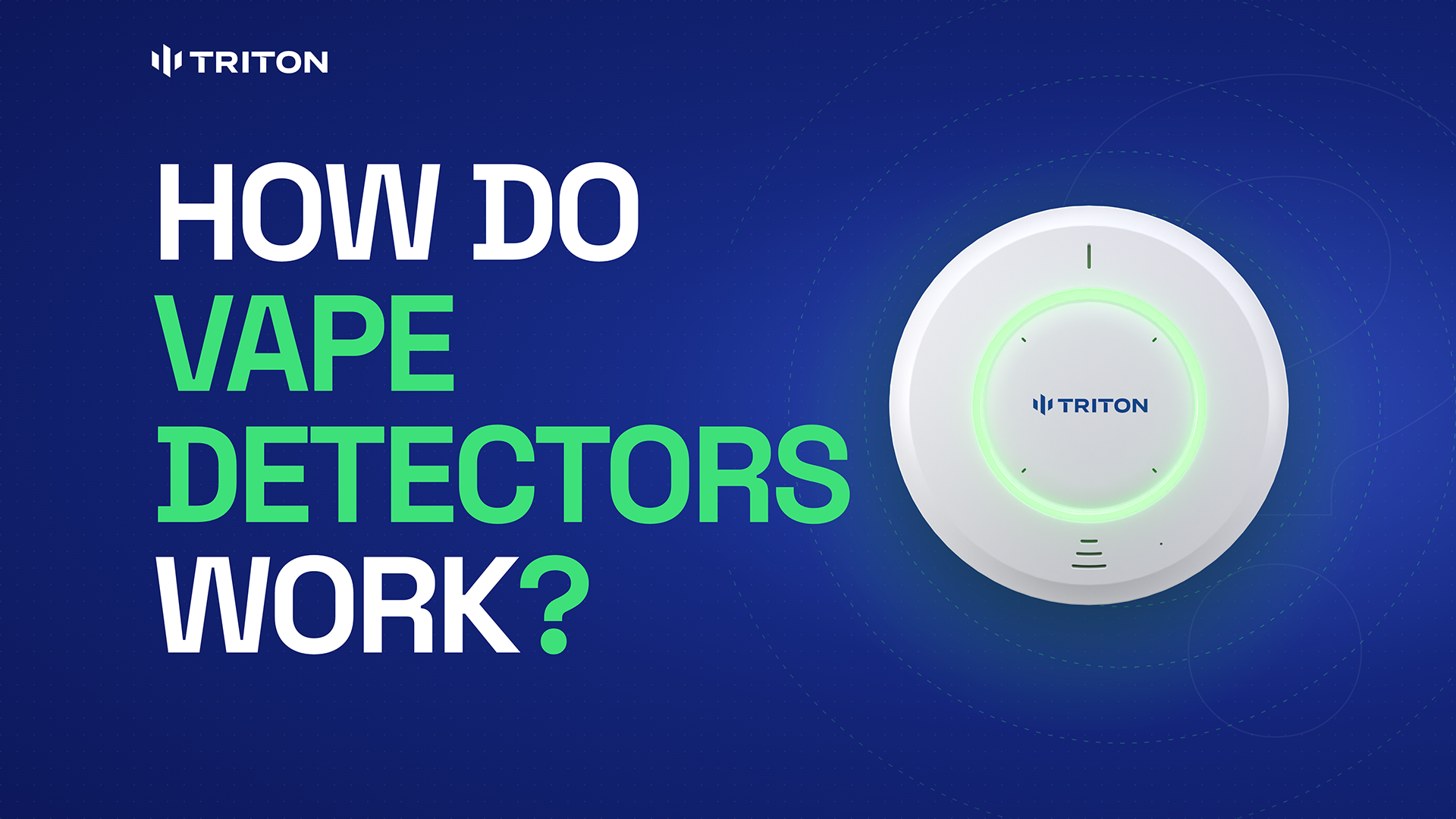
Speed. In a school restroom, students come and go in minutes. A sensor that takes too long to detect and alert is functionally useless. Triton Sensors detect vaping incidents in real time and push instant alerts to designated staff, giving administrators a realistic window to respond before a student has left the area. As one administrator put it: "Triton is the fastest vape detection we found. It allows us to detect vaping while it's happening and sync with our video cameras to manage the evidence."
Accuracy. False positives erode trust and waste staff time. False negatives mean incidents go undetected. Triton's AI detection algorithms are purpose-built for the chemicals found in e-cigarettes and vaping devices, including THC cartridges, and can distinguish vaping from masking attempts like deodorants and aerosols. If you want to understand more about what chemicals vapes actually contain and why detection is so technically demanding, we've covered that in depth on the blog.
Ease of use. A sensor that requires a dedicated IT team to operate doesn't fit the reality of most schools. Triton Devices are designed for straightforward installation and come with an intuitive dashboard that staff can learn quickly. Alerts go directly to the people who need them, with clear information about what was detected and where. Many schools install the devices themselves over a weekend and are discovering trends by the following week.
Total cost. Hardware is only part of the picture. We've written a full breakdown of what vape detectors actually cost, including software, maintenance, and how to make detection affordable on a school budget.
Beyond these fundamentals, the best sensors offer capabilities that extend their value well beyond vaping. Triton Sensors also include aggression detection (screams, shouts, and vandalism sounds), gunshot detection, emergency keyword detection, people counting and loitering detection, and air quality monitoring, turning a single device into a comprehensive safety layer for your facility.
Detection Is the Starting Line, Not the Finish Line
When a Triton Sensor triggers an alert, what happens next?
In schools that see the best long-term results, an alert is the beginning of a structured response process. That process typically includes three elements: discipline, counseling, and follow-up.
Discipline With Purpose
Consistent, fair consequences matter. Students and families need to understand that vaping on school grounds carries real accountability. But effective discipline isn't punitive for its own sake. It's a signal that the school takes student health and safety seriously, and it creates the conditions for a productive conversation about behavior and choices.
Identifying Students Who Need Support
This is where vape detectors offer a benefit that goes beyond simple deterrence. Regular detection of the same students is a meaningful data point. A student caught vaping once may have made a poor decision. A student caught repeatedly is likely dealing with a dependency issue, stress, peer pressure, or underlying mental health concerns that deserve real attention.
Detection gives counselors and administrators the visibility they need to identify these students early and connect them with appropriate resources before a habit becomes a more serious problem. Many schools in the Triton network describe this as one of the most valuable aspects of their deployment: not catching students in the act, but using that information to get struggling students the help they actually need.
The Role of School Counselors
School counselors are on the front lines of student wellbeing, and they should be integrated into the vaping response protocol from day one. When a student is referred after a vaping incident, a counselor conversation can uncover what's really going on — stress at home, social anxiety, a friend group that normalizes substance use — and connect the student with appropriate interventions, whether that's one-on-one counseling, a substance awareness program, or family support.
A Real-World Example: Collinsville Public Schools
Collinsville Public Schools is one of the clearest examples of what it looks like when detection and human response work together. When the district was experiencing drug and behavioral problems in areas not reachable by security cameras, they turned to Triton for a solution.
After deployment, Ben Davis, Assistant Principal at Collinsville Middle School, described the impact simply: "Real-time intervention is everything." Before Triton, incidents were often discovered too late to act on. Some students were already struggling with addiction, and by the time administrators found out, the window to help had closed.
With Triton Sensors installed, the school could receive immediate alerts and respond while incidents were still happening. But the technology was only part of the story. Administrators used early detection as a tool to identify students who needed more than discipline and to get them that support. In one documented case, early detection led directly to counseling support, and the student showed measurable improvement in both behavior and academic performance.
Collinsville didn't stop at vape detection. After seeing results, they expanded their deployment to include keyword detection and aggression detection features, building out a more comprehensive safety layer across their private spaces.
Other Effective Interventions That Work Alongside Detection
Technology and discipline create accountability. Education and environment create lasting change. Here are the interventions that schools in our network have found most effective when combined with sensor deployment:
Peer-to-peer education programs. Students are far more likely to absorb messaging from their peers than from adults. Programs that train student leaders to facilitate conversations about vaping risks tend to create more authentic culture shifts than top-down campaigns.
Parent and family engagement. Vaping often continues at home, and families are essential partners. Schools that communicate openly with parents about the scope of the issue and provide concrete guidance on warning signs and how to talk to their kids see better outcomes.
Environmental design. Bathrooms are the most common site for vaping incidents because they offer privacy. Some schools have addressed this by modifying bathroom layouts, increasing foot traffic through scheduled check-ins, or repositioning hall monitoring to make high-risk areas feel less isolated. Loitering detection can also help here: high occupancy is one of the strongest predictors of vandalism and drug use, and automated alerts let staff get ahead of problems before they start.
Substance use curriculum. Updated health education that covers e-cigarettes specifically — their chemical composition, risks, and the targeted marketing tactics used by vaping companies — gives students more informed frameworks for decision-making. Our guide to vape chemicals is a useful resource to share with health educators.
Early intervention and student assistance programs. Many districts have student assistance programs (SAPs) designed specifically to identify and support students at risk of substance use issues. These programs pair well with vape detection because they provide a structured pathway for referral and follow-up.
Building Your Holistic Vaping Prevention Plan
If you're looking to develop a more comprehensive approach, here's a practical starting framework:
- Deploy sensors in high-risk areas. Prioritize restrooms and other locations with limited supervision. Make sure alert protocols are clearly defined before go-live. Our guide on how high school vape detectors work can help orient staff who are new to the technology.
- Establish a clear response protocol. Define the steps that follow every incident, from immediate response through counseling referral and follow-up. Make sure all relevant staff know their role.
- Integrate counseling referrals. Build a direct pathway from discipline to counseling for every vaping incident. Track outcomes and look for patterns in which students are being referred repeatedly.
- Engage families. Develop communication templates and guidance for reaching out to families after an incident. Treat the conversation as a partnership, not a report of misconduct.
- Review data regularly. Use your sensor data to identify patterns — times of day, locations, frequency — and adjust your prevention efforts accordingly.
- Measure and iterate. Set baseline metrics before deployment and track changes over time. Share results with staff, families, and the school board to build continued support for your prevention program.
Vape detectors are one of the most effective tools available to schools facing substance use challenges. Triton Sensors give administrators the real-time visibility and accountability they need to respond quickly and identify students who need help. But the schools that get the most from that technology are the ones that surround it with the human infrastructure to act on what they learn.
Detection opens the door. What you do next is what makes the difference.