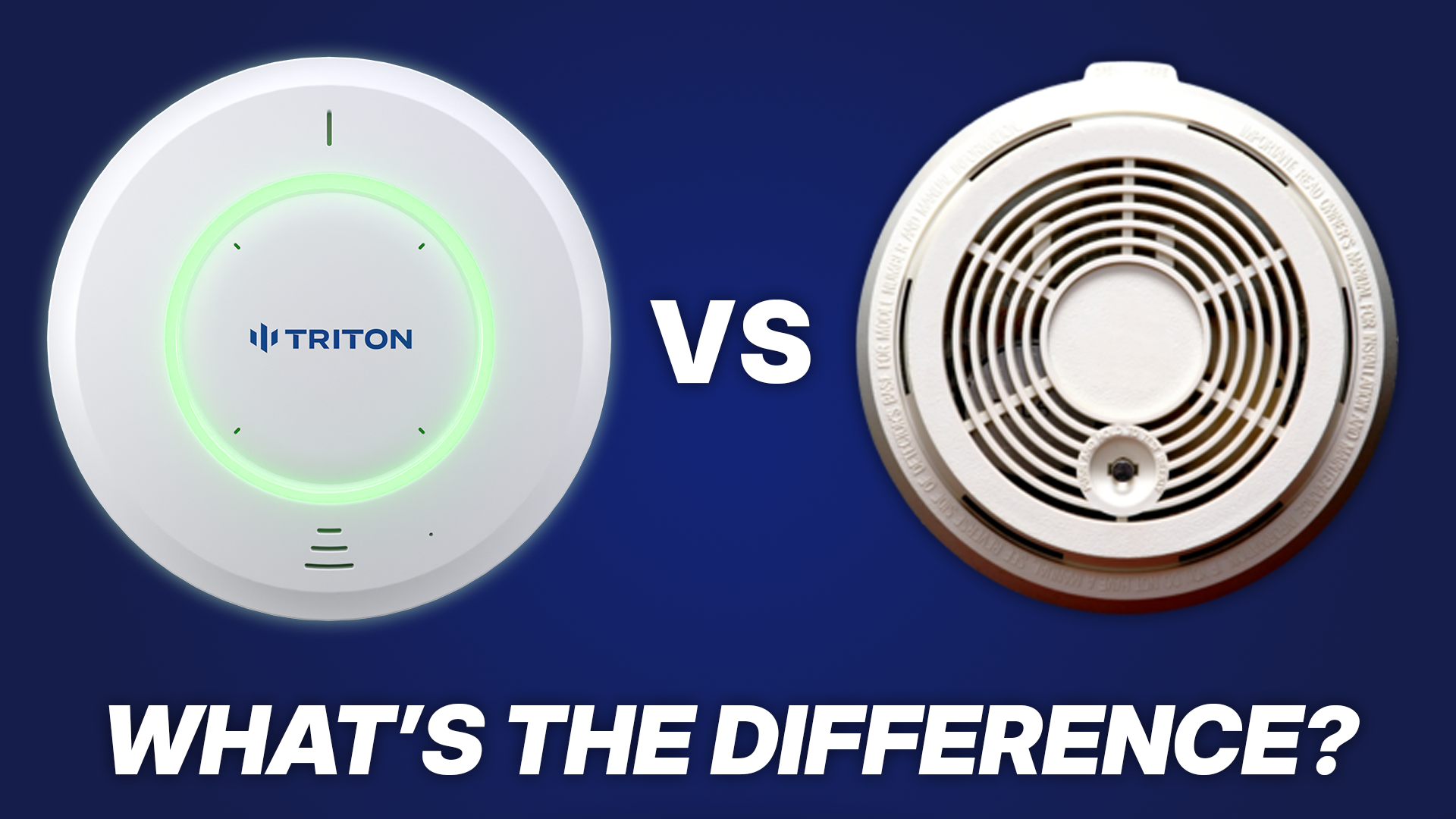
There are a lot of similarities between vape detectors and smoke detectors, but also a lot of big differences too. These differences lie in their purposes.
While smoke detectors are mainly designed for fire safety, vape detectors are built to identify vaping activity inside the likes of schools, offices and hotels. But as we explore below, they have many more advanced functions beyond this.
The purpose of this guide is to help you understand the capabilities of each device and how and when to use them so you can choose the right product.
Let’s begin with the basics.
Quick Comparison Table
What Is a Vape Detector?
A vape detector is a specialized device that identifies vapor particles and chemicals in the atmosphere, often produced by the likes of vape pens and THC vapes. They’re highly sensitive and can detect even the smallest levels in the atmosphere. In particular, they can detect the key ingredients found in vapes, such as nicotine, propylene glycol, vegetable glycerin, and volatile organic compounds (VOCs).
As a result, these subtle devices, which coincidentally look like smoke detectors, are now often found in the likes of:
- School bathrooms and locker rooms
- Office restrooms
- Hotel rooms
- Changing areas
- Stairwells and hallways
These areas are hard to monitor, which makes the less invasive vape detector an ideal solution. And unlike smoke detectors, they do not sound an audible alarm, but trigger a real-time alert to inform supervisory staff of the infringement.
What Is a Smoke Detector?
Smoke detectors have been around for some time. They emerged out of a necessity to stay vigilant for fires, alerting those within buildings so that they can escape in good time.
These fire safety devices operate in much the same way as vape detectors. When smoke fills the air and reaches a certain level, the detector triggers an alarm. Modern alarm systems can send alerts to fire services. In some commercial buildings, especially those containing flammable or combustible chemicals or materials, this will be required by law.
There are two main types of smoke detectors.
Ionization smoke detectors are designed to respond to fast-flaming fires. They can detect even the smallest of combustion particles.
Photoelectric smoke detectors are geared toward slower, smoldering fires. They respond more to visible smoke particles.
Can Smoke Detectors Detect Vaping?
Traditional smoke detectors are, in most cases, unable to detect vaping reliably.
This is down to the vapor of e-cigarettes and how it differs from the smoke produced by a fire. Vapor is made up of smaller aerosol particles. They dissipate quickly, sometimes before they even reach a smoke detector on the ceiling.
Even in smaller, confined spaces, vaping has failed to trigger some smoke alarms. They’re simply not designed to detect the particles it produces.
As a result, smoke detectors tend to be ineffective when identifying vaping indoors.
How Vape Detectors Detect Vaping
Vape detectors are equipped with newer, broader technology that allows them to detect multiple chemicals and particles. They also function differently from smoke detectors. Instead of detecting smoke, they analyze the air composition and monitor for any changes.
To do this, these devices rely on different types of sensors, such as:
- Particulate sensors: Identify fine aerosol particles from vapor
- Chemical sensors: Detect nicotine or THC compounds
- VOC sensors: Monitor air quality changes linked to vaping
- Environmental sensors: Track humidity and temperature shifts
The ability to include different sensors takes the technology to a new level. And better still, it offers genuine enforcement potential. When vaping is detected, the system can send instant alerts via:
- SMS or push notifications
- Email alerts
- Central monitoring dashboards
- Security system integrations
Many devices also log incidents, allowing organizations to track trends and respond to repeated violations.
Key Differences Between Vape Detectors and Smoke Detectors
We’ve looked at both vape detectors and smoke detectors separately. Now let’s break down their key differences, looking at their most important elements.
Detection technology
Smoke detectors use ionization or photoelectric sensors to detect smoke from fires. Vape detectors use multi-sensor air-quality technology to identify vapor particles and chemicals.
Purpose
Smoke detectors are designed for fire prevention and general safety. Vape detectors are designed to detect vaping and monitor air quality in restricted areas, as well as enforce no-smoking policies.
Accuracy
Smoke detectors are highly accurate for detecting fires but unreliable for detecting vaping. Vape detectors are designed to identify vaping activity, and can also detect other particles and changes in the environment, like spikes in noise levels.
False alarms
Smoke detectors may trigger false alarms from cooking smoke, dust, or steam. Vape detectors are designed to distinguish between vapor, steam, and normal environmental changes, so they tend to have fewer false alerts.
Alert systems
Most smoke detectors sound a local audible alarm. Vape detectors typically send silent real-time alerts to supervisory staff.
Data & monitoring
Traditional smoke detectors do not store detailed incident data. Vape detectors often include systems that have dashboards, analytics, and reporting tools for monitoring trends and compliance.
Why Smoke Detectors Alone Are Not Enough for Schools or Businesses
As laws and regulations have changed, the introduction of vapes has felt like a tsunami, one that caught up many young people and left many schools unprepared.
We’ve explored the latest statistics on teen vaping on our site, and as the data shows, it’s a problem in need of tackling. That’s something smoke alarms cannot do; it’s beyond their design.
As a result, schools that don’t turn to more suitable forms of technology can see the likes of:
- Ongoing policy violations
- Poor indoor air quality
- Increased cleaning and maintenance costs
- Difficulty identifying repeat incidents
- Health and safety concerns
As our case studies have shown, schools that have installed vape detectors have seen massive reductions in vaping incidents—in some cases as high as 80%, in just a matter of weeks.
When You Should Use Vape Detectors Instead of Smoke Detectors
Vape detectors are not designed to replace smoke detectors; they’re meant to work alongside each other. Both have their own purposes and functions, and together they make a formidable team.
Smoke detectors, in many cases, are required by law, but the addition of vape detectors can tackle lots of the issues described above. If you work in or manage some of the following types of facilities, installing vape detectors alongside some alarms may be worthwhile:
- Schools and universities
- Office buildings
- Hotels and hospitality venues
- Retail spaces
- Public facilities
- Transportation hubs
When looking at locations within these spaces to install vape detectors, it’s best to target the spaces people are most likely to vape—usually quiet, out of the way areas like bathrooms, locker rooms and stairwells.
Can Vape Detectors Also Detect Smoke?
Some advanced types of vape detectors can detect smoke as well as vapor. Our Triton Sensors vape detectors, for example, can detect smoke, specifically cigarette smoke and marijuana smoke.
Not all vape detectors can detect the smoke of fires, however. If a device claims to do so, it’s important to make sure it meets fire code requirements before replacing any smoke detectors. While vaping poses a health hazard, if left undetected, a fire can destroy lives.
Cost Comparison: Vape Detectors vs Smoke Detectors
It’s always important to consider the costs of anything. In some cases, such as with fire alarm systems, the cost isn’t even a consideration when it comes to protecting human life. Vape detectors, on the other hand, are newer to market and don’t always fit into the likes of tight school budgets.
Here’s a general idea of the cost ranges of both vape and smoke detectors:
Smoke detector costs:
- Basic residential units: $20 to $100
- Commercial systems: higher depending on integration and installation
Vape detector costs:
- Typically $300 to $1,000+ per unit
- Possible additional costs for installation, software, and monitoring
Vape detectors, on the face of it, are more expensive, but they come with the benefit of improved policy enforcement, better public health, and lower maintenance costs—many vape detectors are powered by an Ethernet cable, so you don’t have to change and replace batteries.
Which Is Better: Vape Detector or Smoke Detector?
Neither device is better than the other—they both serve their own purposes. Used together, they offer complete cover in terms of fire safety, public health, and policy enforcement.
In many instances, smoke detectors are required by law. Vape detectors are optional, but as we’ve seen above, they’re becoming just as essential, especially for the likes of schools.
Hopefully, this comparative guide has proved useful in helping you understand the key differences, how each device functions, and ultimately, which ones you need to tackle the problem at your feet.